Custom car wraps are the ultimate secret weapon for modern vehicle owners because they offer a high-performance alternative to traditional paint, combining complete aesthetic freedom with durable protection. Using premium, automotive-grade cast vinyl allows you to achieve bespoke finishes, from satin chrome to color-shifting metallics, while protecting the factory clear coat to preserve the vehicle’s long-term resale value.
The Shift Toward Advanced Surface Protection
In a saturated automotive market, achieving a unique identity requires moving beyond factory paint limitations. While standard OEM (Original Equipment Manufacturer) finishes are often restricted to high-volume colors, vinyl wrapping utilizes advanced polymer technology to offer textures and hues that are technically impossible to replicate with a spray gun.
Selecting a shop with a proven track record is the most critical variable in the longevity of your investment. Vaia Design, established in 2014, serves as the region’s flagship Ceramic Pro Elite Dealer. With a decade of specialized experience and multiple industry certifications, our team ensures every car wrap in Riverside, CA, project adheres to rigorous technical standards, from surface tension analysis to precision edge-tucking.
The Science of Vinyl: Understanding Cast vs. Calendered
To understand why a professional wrap is a “secret weapon,” one must look at the film at the molecular level. In the industry, there are two primary types of vinyl: calendered and cast.
Calendered vinyl is manufactured by “rolling” the material into a sheet, similar to how pasta is rolled. This creates internal tension. When exposed to the intense Southern California heat, calendered vinyl wants to shrink back to its original shape, leading to “fingering” at the edges and premature failure.
Cast vinyl, which we use at Vaia Design, is made by pouring a liquid mixture onto a casting sheet. This produces a relaxed, stable film with no “memory” of a previous shape. It is thinner, more comfortable, and designed to last twice as long as cheaper alternatives. This technical distinction is why professional installations maintain their “painted-on” look for years, even on complex bumpers and recessed panels.
Key Performance Specifications:
- Polymer Construction: High-grade 3-4 mil cast vinyl designed for extreme durability and weather resistance.
- Advanced Adhesion: Pressure-activated adhesives featuring microscopic air-release channels to eliminate “silvering” and ensure a smooth finish.
- Finish Diversity: Options include Ultra-Gloss, Stealth Matte, Brushed Metal, and multi-tone Iridescent films.
- Integrated UV Inhibitors: The film acts as a barrier to solar radiation, preventing oxidation and “fading” commonly seen on exposed horizontal surfaces.
- Thermal Restoration: Premium films possess self-healing properties, where light surface abrasions can be “reset” through controlled heat application.
Analyzing the Value: Custom Wraps vs. Automotive Paint
For the discerning owner, the decision between vinyl and paint often comes down to the balance of cost, time, and future flexibility.
| Feature | Professional Vinyl Wrap | High-End Custom Paint |
| Reversibility | 100% Removable; leaves OEM paint intact | Permanent; requires destructive prep (sanding) |
| Turnaround Time | 3–7 business days | 3–6 weeks minimum |
| Financial Entry | $2,500 – $6,000+ | $5,000 – $15,000+ |
| Paint Protection | Acts as a physical barrier against debris | Prone to stone chipping and etching |
| Market Value | Preserves or increases trade-in value | Often decreases value due to non-standard colors |
Local Field Insights: Performance in the Inland Empire
The environmental conditions in Southern California, specifically high UV indices and airborne particulates, demand a specialized approach to vehicle care. Our team recently completed a full color change for a client in Canyon Crest, transitioning a luxury SUV to a sophisticated satin charcoal. By using professional-grade materials, we ensured the edges wouldn’t lift despite the area’s fluctuating temperatures.
In commercial applications, such as a recent project for a fleet owner in La Sierra, we utilized partial wraps to create high-impact branding. These wraps serve double duty, acting as a “sacrificial layer” against the road debris encountered during heavy commuting. Furthermore, residents in Orangecrest often choose clear or color-change wraps specifically to combat the aggressive sun exposure that typically degrades clear coats within five years. Executing a flawless Riverside car wrap means accounting for these local environmental stressors during installation.
Debunking the Myth: Does Vinyl Damage Factory Paint?
A common misconception in the automotive community is that vinyl adhesives “eat through” the paint or cause it to peel upon removal. This is factually incorrect.
In reality, a professionally installed wrap acts as a protective cocoon. It prevents chemical etching from bird droppings, acid rain, and UV-induced oxidation. The adhesive used in premium films is specifically formulated to be “low-tack” initially and “long-term removable” for up to 7 years.
Damage typically only occurs in two scenarios:
- The vehicle had a low-quality “maaco-style” respray with poor adhesion to the primer.
- The wrap was left on significantly past its service life, causing the adhesive to “bake” into the clear coat.
By choosing car wrap in Riverside specialists who understand material lifespan and paint chemistry, your factory paint remains preserved in a “time capsule” state, often looking better than non-wrapped cars of the same age once the film is removed.
Synergy: Combining Wraps with Ceramic Pro Technology
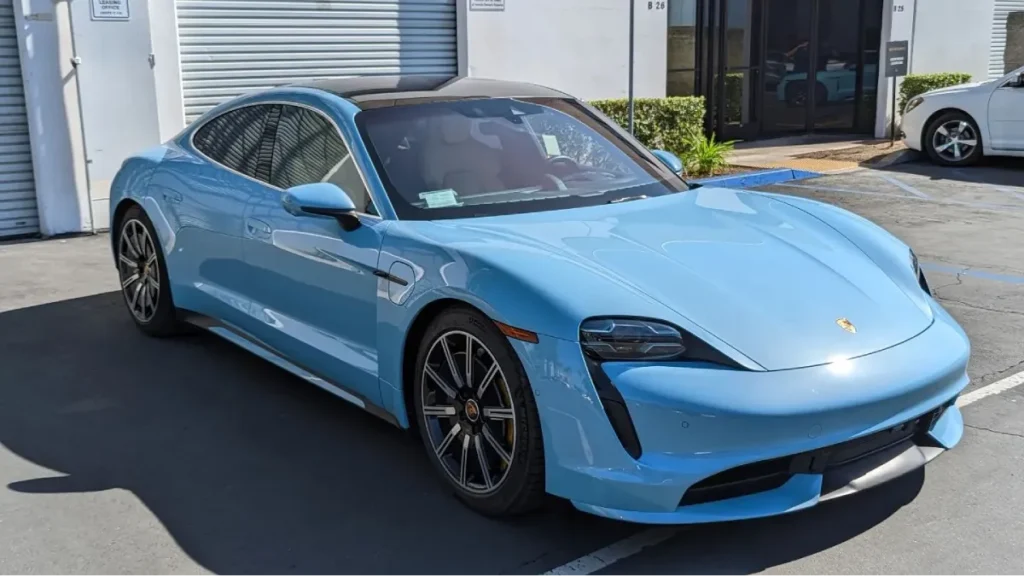
As a Flagship Elite Dealer, we specialize in the “Ultimate Armor” approach. Modern vinyl is porous; if you look at it under a microscope, it has tiny “hills and valleys.” This is why white wraps can eventually look “dingy”; dirt gets trapped in those pores.
By applying a specialized Ceramic Pro coating over your vinyl wrap, we create a permanent chemical bond that fills those pores. This adds a hydrophobic (water-repellent) layer, making maintenance effortless. Bird droppings, tree sap, and road tar, which could normally stain vinyl, simply slide off. When investing in a Riverside, CA, car wrap, adding ceramic protection is the most effective way to ensure the finish remains vibrant throughout its life.
The Professional Installation Workflow: Why DIY Fails
Many enthusiasts consider “DIY” wrap kits, but the gap between a home-garage job and a professional studio is immense. Our 10+ years of experience have refined a 5-step workflow:
- Chemical & Mechanical Decontamination: We don’t just wash the car. We use iron-removing chemicals and mechanical clay-bar treatments to ensure the surface is chemically pure. Any speck of dust left behind will look like a boulder under the vinyl.
- Precision Disassembly: To achieve a “paint-like” look, we remove mirrors, door handles, emblems, and light housings. This allows us to “hide” the edges of the vinyl deep behind the panels.
- Stress-Free Stretching: Amateur installers often “over-stretch” vinyl into deep recesses. This thins the adhesive and the pigment. Our technicians use heat-management techniques to keep the film relaxed.
- Post-Heat Setting: This is the most skipped step in the industry. Vinyl has “memory.” If you stretch it, it wants to shrink back. We use infrared thermometers to heat the vinyl to its “break point” (usually between 175°F and 195°F), which kills the memory and locks the shape forever.
- Curing & Inspection: The vehicle sits in a climate-controlled bay to ensure the adhesive bonds correctly before being exposed to the elements.
The Branding Power of Commercial Wraps
While many of our clients are luxury car enthusiasts, the “secret weapon” status of wraps extends to business owners. A commercial wrap is the only marketing expense that works for you 24/7 without a recurring monthly fee.
Compared to digital ads or billboards, a wrapped vehicle offers the lowest “cost-per-impression” in the advertising industry. Whether parked at a job site or driving on the freeway, your brand is seen by thousands of potential local customers. Because the wrap protects the paint, when it’s time to rotate your fleet or sell the vehicle, you can remove the branding to reveal pristine paint, maximizing your resale value.
In Summary
Custom car wraps represent the perfect intersection of style, protection, and practicality. For vehicle owners who demand excellence and want to keep their assets in pristine condition, there is no better solution. With a seasoned team like Vaia Design, you ensure that your vehicle isn’t just another car on the road; it becomes a statement.
Ready to define your vehicle’s aesthetic? Contact us at Ceramic Pro Riverside today. Our certified technicians are ready to guide you through our extensive swatch library and protection packages. As Riverside’s flagship Ceramic Pro Elite Dealer with over 10+ years of experience, we have the tools and the talent to bring your vision to life.
People Also Ask (FAQ)
What is the expected lifespan of a professional wrap?
With California’s climate, a high-quality wrap generally lasts 5 to 7 years. Factors such as “vertical” vs “horizontal” exposure (hoods and roofs take more sun) play a role. Maintenance is key; vehicles that are ceramic-coated or garaged will consistently reach the upper end of that spectrum.
Can wraps hide existing paint damage?
No. Vinyl is extremely thin and conforms to every contour. While it can mask minor fading, it will actually highlight deep scratches, rock chips, or peeling clear coat. In fact, if your clear coat is already “flaking,” the vinyl will likely pull it off during installation or removal. We recommend paint correction before wrapping in these cases.
Is wrapping more cost-effective than painting?
In almost every scenario, yes. A high-quality, show-level paint job takes weeks to cure and can significantly increase downtime. A wrap is faster to install, easier to reverse, and helps preserve the original finish and long-term asset value.
How do I maintain my wrap to ensure it stays looking new?
Avoid automatic “brush” car washes at all costs. Hand washing with a pH-neutral soap is the gold standard. We also recommend using a “wrap-care” sealant every few months to keep the UV inhibitors active.