
Some used cars require more preparation before ceramic coating because their paint has accumulated scratches, oxidation, embedded contaminants, and residue from previous treatments. Unlike newer vehicles, older finishes may need additional decontamination and paint correction to create a clean, suitable surface for coating adhesion and appearance.
Why Does Paint Condition Matter Before Ceramic Coating
Ceramic coating forms a protective layer over the vehicle’s existing finish. It improves surface hydrophobicity, enhances gloss, and makes routine cleaning easier, but it does not eliminate underlying paint defects.
Preparation matters because the coating needs a properly cleaned surface to bond as intended.
When researching ceramic coating in Perris, CA, owners should understand that two vehicles of the same model and year may require completely different preparation procedures.
A vehicle with regularly maintained paint might need only decontamination and light polishing. Another vehicle with similar mileage could require extensive cleaning and multiple polishing stages.
Several factors influence preparation requirements:
- Previous washing and drying techniques.
- Exposure to sunlight and outdoor conditions.
- Accumulated road contaminants.
- Existing scratches and swirl marks.
- Previous waxing or polishing treatments.
- Paint repairs or refinishing.
- Condition and thickness of the remaining clear coat.
Professional inspection helps determine which issues require attention before a coating is applied.
How Does Used Car Preparation Compare With New Car Preparation
Although new vehicles typically have experienced less environmental exposure, they are not automatically free from defects.
Transportation, dealership washing, storage conditions, and improper handling can introduce contamination or light scratches before the owner takes delivery.
Used vehicles generally have a longer maintenance history, creating more opportunities for damage and contamination.
| Preparation Factor | New Cars | Used Cars |
| Surface Contamination | Usually less accumulated contamination | Often requires more extensive cleaning |
| Swirl Marks | Possible from dealership washing | May be more widespread |
| Oxidation | Generally uncommon | More likely with prolonged exposure |
| Previous Products | Possible dealership-applied products | May contain layers of wax or sealant |
| Paint Correction | Often minimal or moderate | Depends on existing defects |
| Inspection Requirements | Important despite vehicle age | Particularly important due to unknown history |
| Preparation Time | Often shorter | May require additional treatment |
This comparison reflects typical conditions, not guaranteed differences.
A professionally maintained older vehicle can require less preparation than a poorly handled new one.
What Paint Problems Make Used Cars Harder to Prepare
1. Embedded Contamination
Industrial fallout, brake dust, tar, and mineral deposits can remain bonded to paint after ordinary washing. Professional decontamination removes these particles before polishing and coating.
2. Swirl Marks and Fine Scratches
Improper washing, dirty towels, and automatic car washes can leave fine scratches and swirl marks. Ceramic coating doesn’t hide these defects, so technicians must inspect the paint and decide whether polishing is needed.
3. Oxidation and Sun Damage
Prolonged sun exposure and neglected maintenance can cause dullness and paint deterioration. Light defects may improve with polishing, but peeling clear coat and severe damage generally require professional refinishing.
4. Residue From Previous Protective Products
Used cars may have leftover waxes and sealants from previous treatments. Technicians must assess the existing surface and use appropriate cleaning or polishing methods to prepare it for the new coating. Proper preparation creates a solid foundation for Perris CA ceramic coating services.
How Do Professionals Prepare a Used Car for Ceramic Coating
Professional preparation involves cleaning, inspecting, correcting, and preparing the paint before applying the coating. The exact process depends on the vehicle’s condition.
Step 1: Inspect the Paint
Technicians inspect the paint under appropriate lighting to identify scratches, contamination, oxidation, and previous repairs. Paint thickness measurements may help assess correction risks and determine the appropriate preparation method.
Step 2: Wash the Exterior
A thorough wash removes loose dirt and grime, reducing the risk of scratching the paint during subsequent preparation.
Step 3: Remove Surface Contamination
Technicians assess whether bonded contaminants, such as iron fallout and road deposits, require chemical or mechanical decontamination. The method depends on the paint’s condition and contamination level.
Step 4: Correct Paint Imperfections
Machine polishing can improve gloss and reduce certain scratches and other defects. A one-step enhancement addresses lighter imperfections, while multi-step correction targets more significant defects. Deep scratches and compromised clear coat may not be safely correctable.
Step 5: Prepare the Surface
Technicians remove polishing oils and residue according to the coating manufacturer’s instructions. A final inspection helps ensure the paint is clean and ready for application.
Step 6: Apply and Cure the Coating
The ceramic coating is applied according to the product’s requirements for application conditions, removal timing, and curing. Vehicle owners should follow the installer’s washing and maintenance instructions during the initial curing period.
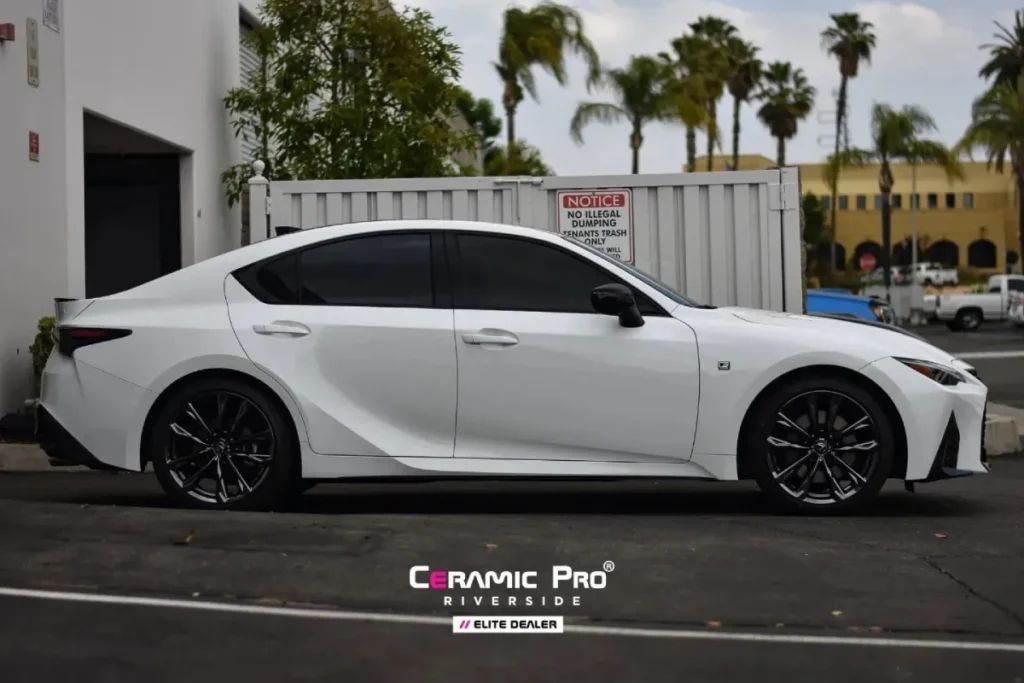
Common Myth: Ceramic Coating Can Restore Damaged Paint
One widespread misconception is that ceramic coating can repair scratches, restore failed clear coat, or make old paint look new without preparation.
Ceramic coating protects and enhances the existing finish, but it is not a substitute for paint correction or refinishing.
Coatings can improve gloss and make a well-prepared surface appear richer. However, they do not rebuild missing clear coat or permanently fill deep scratches.
Another misconception is that ceramic coating makes a vehicle scratch-proof.
Although certain coatings may help reduce minor wash-related marring, they do not prevent all scratches, rock chips, or impact damage.
Paint protection film offers a different type of protection because it creates a thicker physical barrier over vulnerable painted areas.
Understanding the distinction helps owners choose appropriate protection rather than expecting a coating to solve every paint problem.
How Does Proper Preparation Affect Coating Performance
Preparation influences both the appearance and adhesion of a ceramic coating.
If bonded contamination, polishing residue, or incompatible products remain on the surface, coating application and durability may be compromised.
A properly prepared finish supports more consistent application and helps the coating perform according to product specifications.
Several benefits depend on adequate preparation:
- More uniform gloss across painted panels.
- Reduced visibility of correctable surface defects.
- Improved conditions for coating adhesion.
- More consistent water-repellent behavior.
- Easier routine washing and maintenance.
However, no preparation process guarantees unlimited coating durability.
Exposure conditions, washing habits, chemical use, and manufacturer requirements still influence performance.
Drivers seeking ceramic coating in Perris should consider preparation quality alongside the coating product itself.
Protect Your Used Vehicle With the Right Preparation
Used vehicles often require additional preparation because years of driving, washing, environmental exposure, and previous treatments can affect paint condition.
However, the most important factor is not vehicle age. It is the condition of the finish before coating.
Ceramic Pro Riverside helps vehicle owners assess paint condition and explore ceramic coating options that match their protection goals.
Whether your vehicle needs a light enhancement or more involved correction, choosing the right preparation can make a meaningful difference in the final appearance.
Ready to give your vehicle the protection it deserves?
Contact us to discuss your vehicle’s paint condition, explore available Ceramic Pro packages, and start professional surface protection.
People Also Ask
Is Ceramic Coating Worth It on a Used Car?
Yes, ceramic coating can be worthwhile when the paint is in suitable condition. It can improve gloss, provide hydrophobic properties, and simplify maintenance. Existing defects should be evaluated before application.
Can You Ceramic Coat a Car With Scratches?
Yes, but scratches will generally remain visible unless you correct them beforehand. Light clear coat scratches may respond to polishing, while serious damage may require alternative repairs.
How Long Does It Take to Prepare a Used Car for Ceramic Coating?
Preparation time depends on contamination, paint defects, and the correction required. A lightly maintained finish may need less work than a vehicle requiring extensive multi-step polishing. The installer should provide a vehicle-specific estimate.
Is Paint Correction Necessary Before Ceramic Coating?
Not always. Paint correction is recommended when eligible imperfections need improvement before protection. Vehicles with healthy finishes may require only cleaning, decontamination, and final surface preparation.
Can Ceramic Coating Fix Faded or Peeling Clear Coat?
No. Ceramic coating cannot replace missing or failing clear coat. Severe deterioration generally requires an automotive refinishing professional’s assessment.